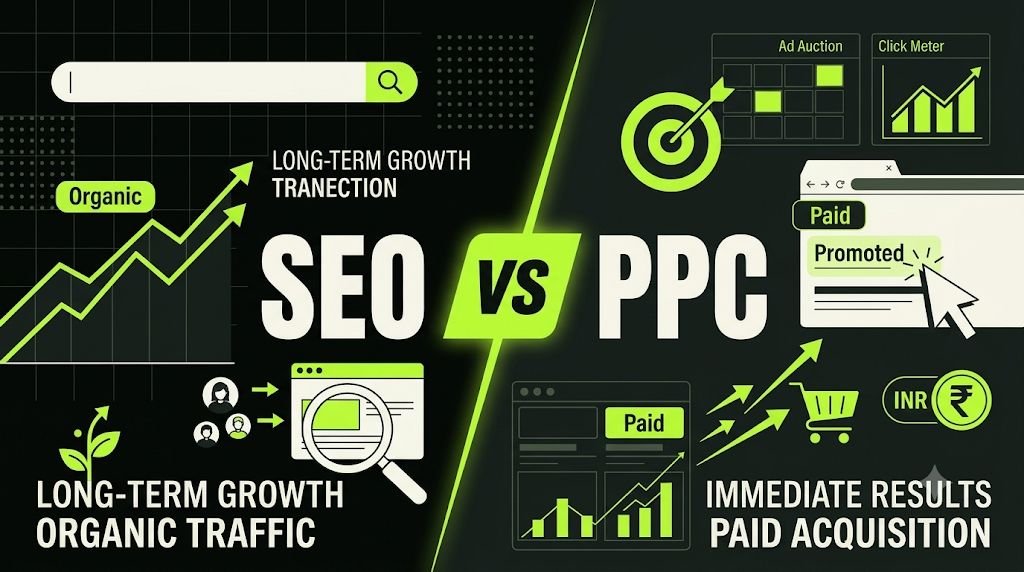
Choosing between Search Engine Optimization (SEO) and Pay-Per-Click (PPC) advertising is one of the most important decisions when planning your digital marketing strategy. Both approaches help businesses attract potential customers through search engines, generate enquiries and increase online visibility. However, they work differently, require different investments and deliver results over different timelines.
So, which is better for your business: SEO or PPC?
The answer depends on your business objectives, marketing budget, competition, customer acquisition goals and how quickly you need results. SEO is generally more suitable for building sustainable organic visibility and long-term traffic, while PPC can generate targeted traffic and enquiries more quickly when campaigns are properly configured.
For many businesses, the strongest approach is not choosing one over the other. It is understanding how SEO and PPC complement each other and allocating resources according to business priorities.
In this guide, I’ll explain the differences between SEO and PPC, compare their costs, benefits, limitations and potential returns, and share practical examples to help you choose the right strategy.
Image generation note: You’ve hit the Free plan limit for image generations requests. You can create more images when the limit resets in 7 hours. I was unable to invoke the image-generation tool right now, so the 1200 × 630 featured image could not be created in this response.
1. What Is SEO?
Search Engine Optimization (SEO) is the process of improving a website’s visibility in organic, unpaid search engine results. It involves optimizing website content, technical performance, site structure, keyword relevance and authority to help search engines understand and rank relevant pages.
When someone searches for a service or product, search engines evaluate numerous signals to determine which pages are relevant and useful.
SEO focuses on improving your website’s ability to attract visitors without paying for every individual click.
Key components of SEO
-
Keyword research: Identifying relevant search terms your potential customers use.
-
On-page SEO: Optimizing page titles, headings, content, internal links and metadata.
-
Technical SEO: Improving crawling, indexing, website architecture, mobile usability and technical performance.
-
Content marketing: Publishing informative, useful and relevant content that addresses customer questions.
-
Local SEO: Improving visibility for location-based searches and Google Business Profile discovery.
-
Off-page SEO: Building authority through relevant backlinks, digital PR and genuine brand mentions.
For example, a dental clinic in Delhi may want to appear for searches such as “dental implant clinic in Delhi” or “best dentist near me.” A structured SEO strategy can help the clinic improve its visibility for relevant local searches over time.
Google’s SEO Starter Guide provides guidance on making websites easier for search engines to discover, understand and present in search results.
2. What Is PPC Advertising?
Pay-Per-Click (PPC) is a digital advertising model in which advertisers pay when someone clicks on their advertisement. Google Ads is one of the most widely used PPC platforms, allowing businesses to display sponsored listings for selected search terms.
Unlike SEO, which focuses on earning organic visibility, PPC allows businesses to participate in advertising auctions and compete for paid placements.
For example, a website development company targeting customers in Delhi can create Google Ads campaigns for searches such as “WordPress website developer in Delhi” or “website design company near me.”
When someone clicks an eligible advertisement, the advertiser may be charged according to the campaign’s bidding and pricing system.
Key components of PPC advertising
-
Keyword targeting: Selecting search terms relevant to your products and services.
-
Campaign structure: Organizing campaigns and ad groups around specific services or audiences.
-
Ad copywriting: Creating relevant advertisements that encourage qualified clicks.
-
Bidding strategy: Setting bids or automated bidding goals according to campaign objectives.
-
Landing page optimisation: Ensuring visitors reach relevant pages with clear information and calls to action.
-
Conversion tracking: Measuring enquiries, calls, purchases and other valuable actions.
-
Campaign optimisation: Reviewing search terms, costs, performance and lead quality to improve results.
PPC is particularly useful when a business wants to promote a new service, test demand, reach a specific audience or generate enquiries within a defined campaign period.
Google explains how its advertising auction works, including the influence of bids, ad quality and landing page relevance.
3. SEO vs PPC: Understanding the Key Differences
SEO and PPC can target similar search queries, but their traffic acquisition models are different.
With SEO, businesses invest in improving their website and earning organic search visibility. With PPC, businesses pay to participate in advertising placements and attract visitors through paid campaigns.
Here is a comparison of the main differences.
| Comparison | SEO | PPC |
|---|---|---|
| Traffic source | Organic search | Paid advertisements |
| Payment model | Service and implementation costs | Advertising spend and management |
| Time to results | Generally longer-term | Can start quickly |
| Visibility | Earned organic placements | Sponsored placements |
| Traffic continuity | Can continue without paying per click | Depends on active campaigns and budget |
| Keyword targeting | Content and search intent optimisation | Paid keyword and audience targeting |
| Long-term value | Can build sustainable organic traffic | Requires continued campaign investment |
| Testing | Takes time to evaluate organic changes | Useful for faster campaign experiments |
| Main focus | Organic visibility and authority | Paid reach and conversions |
| Best suited for | Long-term growth | Immediate campaign objectives |
Neither channel guarantees leads, sales or profitability. Results depend on search demand, competition, website quality, targeting, budget and conversion experience.
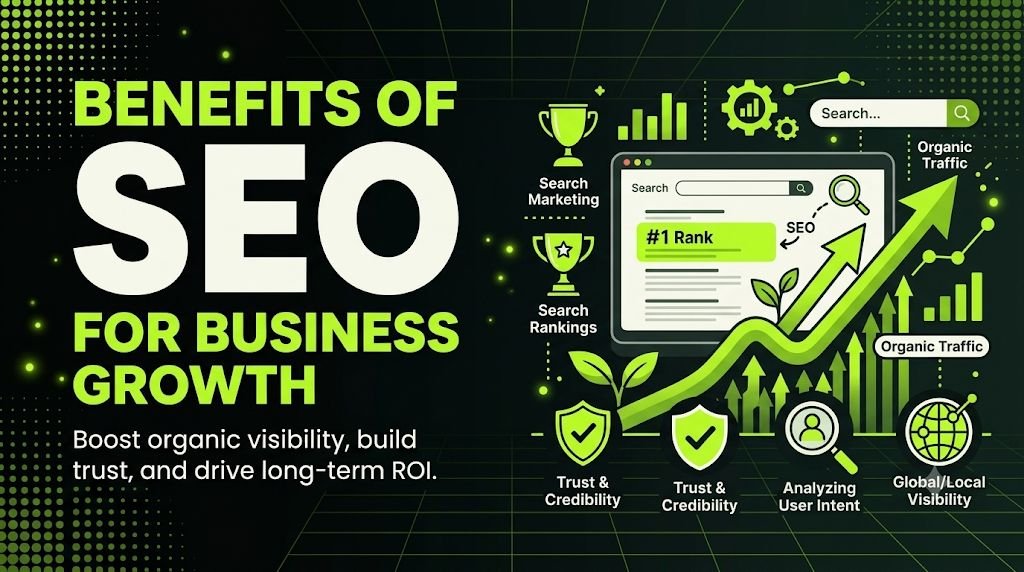
4. Benefits of SEO for Business Growth
SEO is an important investment for businesses that want to develop a sustainable online presence. Instead of paying for each visitor, you work towards earning visibility for relevant searches.
4.1 Builds long-term organic visibility
One of the main advantages of SEO is its potential to generate traffic over an extended period.
A well-optimised service page or informative article may continue attracting visitors after its initial publication. However, maintaining visibility requires monitoring, content updates, technical improvements and ongoing competition analysis.
4.2 Reduces dependency on paid advertising
Businesses that rely entirely on advertising may experience traffic fluctuations when budgets change or campaigns stop.
SEO creates another acquisition channel. If your website earns relevant organic visibility, you can attract potential customers without paying for every organic click.
This does not mean SEO is free. Content development, technical work, strategy and optimisation all require investment.
4.3 Supports brand credibility and customer trust
Users often explore several websites before choosing a service provider.
Appearing in relevant organic results, publishing helpful information and maintaining a professional website can strengthen brand familiarity and credibility.
For healthcare businesses, this is especially important because patients may research treatments, doctors, procedures and clinics before making an appointment.
Healthcare websites should use accurate information and qualified medical review where clinical claims are involved.
4.4 Helps attract high-intent visitors
SEO is not simply about increasing website traffic. It should attract visitors whose search intent matches your services.
For example:
-
“What is dental implant treatment?” indicates informational intent.
-
“Dental implant cost in Delhi” indicates commercial research.
-
“Book dental implant consultation” indicates stronger transactional intent.
A well-planned SEO strategy creates appropriate pages for these different stages of the customer journey.
4.5 Supports local business discovery
Local SEO can help businesses reach customers searching for services in specific cities, neighbourhoods and service areas.
For example, a physiotherapy clinic may target relevant searches such as:
-
Physiotherapist in Delhi
-
Sports injury clinic in South Delhi
-
Back pain physiotherapy near me
-
Physiotherapy clinic in Gurgaon
Explore my Local SEO services to understand how local search optimisation can support business visibility.
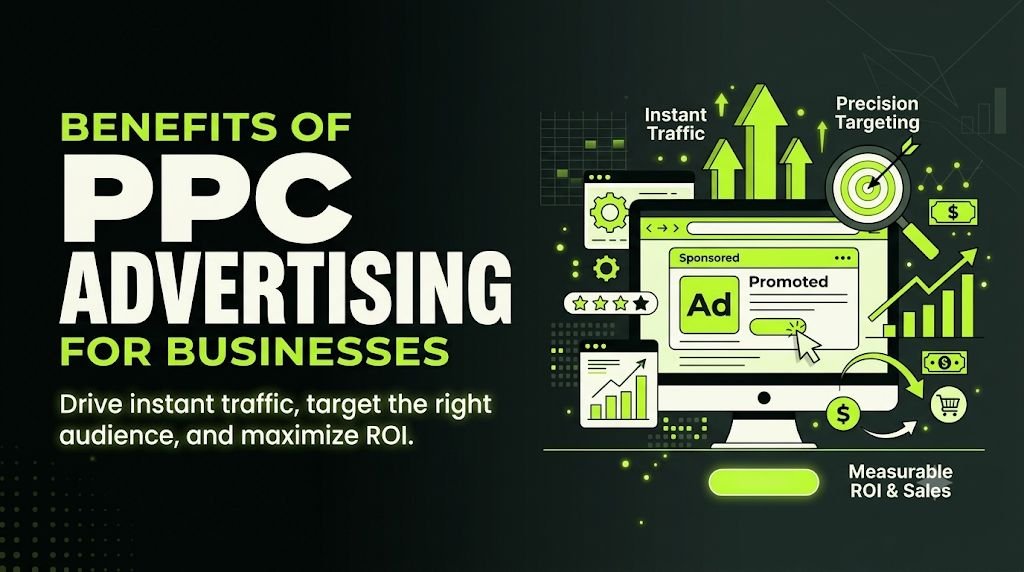
5. Benefits of PPC Advertising for Businesses
PPC offers a different advantage: it allows businesses to reach relevant audiences through paid placements without waiting for organic rankings to develop.
5.1 Faster campaign visibility
Once a campaign is approved, configured and eligible to serve, advertisements can begin appearing for relevant searches.
This makes PPC useful for businesses launching new services, promoting seasonal offers or entering competitive markets.
However, campaign approval, bidding competition, budget and targeting influence when and where advertisements appear.
5.2 Greater control over advertising budgets
PPC allows advertisers to define budgets, bidding strategies, locations, schedules and campaign objectives.
For example, a Delhi-based business may focus its advertising on Delhi NCR rather than spending its entire budget targeting customers across India.
Budget control does not guarantee a specific number of leads. Actual results depend on competition, click costs and conversion performance.
5.3 Reaches customers with commercial intent
PPC campaigns can target searches that indicate a strong interest in purchasing or contacting a service provider.
A website development company could advertise for:
-
WordPress website development company
-
Professional website developer in Delhi
The objective is to connect the advertisement with a relevant landing page and a clear next step.
5.4 Useful for testing keywords and offers
PPC provides an opportunity to test different advertising messages, landing pages and keyword groups.
For example, a healthcare clinic could test whether people respond more positively to advertisements focused on treatment information, consultation availability or clinic location.
The resulting campaign data can inform future marketing decisions. However, paid search behaviour should be interpreted carefully rather than treated as a guaranteed predictor of organic performance.
5.5 Measurable campaign performance
PPC campaigns can measure important metrics such as impressions, clicks, cost per click, conversion rate and cost per conversion.
With properly configured tracking, businesses can also measure enquiries, calls, purchases and qualified leads.
Google provides conversion tracking and measurement tools to help advertisers understand which interactions lead to valuable business actions.